

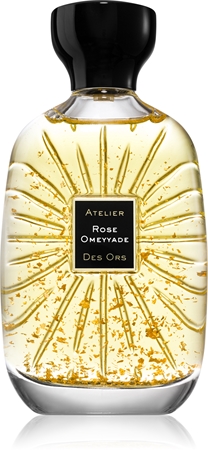
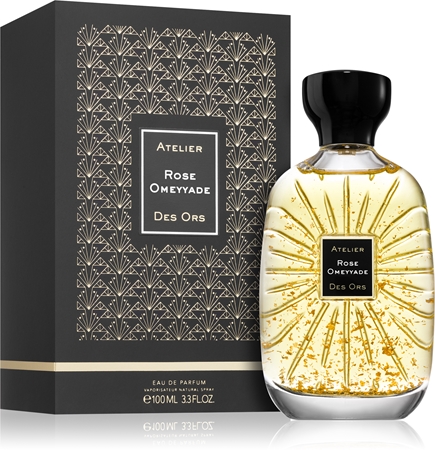
Description Atelier Des Ors Rose Omeyyade
Top notes Top notes - They develop straight after you put the fragrance on. They create the first impression and tend to be quite intense, but not long-lasting. | Rose, Raspberry, Pink Pepper |
Middle notes Middle notes - The heart of the fragrance comes out after a couple of minutes when the head of the scent fades away. These notes usually last around 2 to 3 hours. | Patchouli, Guaiac Wood, Brown Sugar |
Base notes Base notes - The last and often longest part of the fragrance's evolution on your skin. Takes anywhere from 4 hours to over a day. | Sandalwood, Peruvian Balm, Amber |
| Fragrance category | floral, woody |
| Concentration of the fragrance component | Eau de Parfum |
Step into the elegance of ancient palaces with every spray
Wrap yourself in a velvety blend of rose, woods, and amber. Atelier Des Ors Rose Omeyyade Eau de Parfum is an opulent and seductive fragrance inspired by the noble Damask rose, capturing the essence of sensuality and grandeur. With its rich woody and amber undertones, it evokes the splendour of Levantine palaces. Experience the captivating warmth of a truly majestic fragrance.
- a floral, oriental scent
- inspired by the ancient city of Petra
- designed for men and women
Composition of the fragrance:
The scent opens with a vibrant and playful burst of raspberry, its juicy sweetness balanced by the delicate elegance of rose buds and a subtle sparkle of pink pepper. As it unfolds, the fragrance reveals a sensual warmth – patchouli and guaiac wood lend earthy richness and smoky depth, while a brown sugar accord drapes the composition in a velvety, caramelised sweetness. In the dry-down, notes of sandalwood, Peru balsam, and amber emerge, enveloping the skin in a creamy, resinous warmth that lingers with quiet sophistication.
The story of the fragrance:
Atelier Des Ors Rose Omeyyade Eau de Parfum raws inspiration from the opulent beauty of the Damask rose – precious, seductive, and timeless. Named in tribute to the Umayyad dynasty, this scent evokes the splendour of the Levant's intricately adorned palaces, where art, culture, and sensuality once flourished. It is a radiant homage to refinement, echoing the romanticism of orientalist paintings.