


Description Armani Acqua di Giò
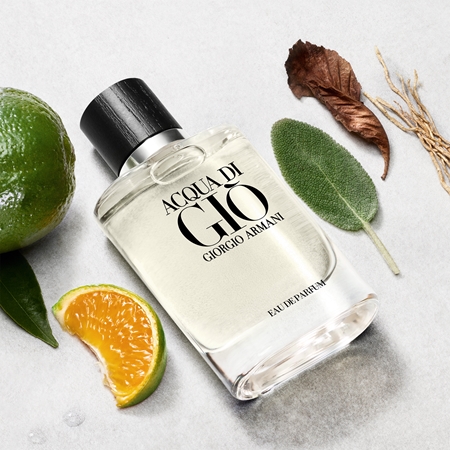
Top notes Top notes - They develop straight after you put the fragrance on. They create the first impression and tend to be quite intense, but not long-lasting. | Sea Notes, Green Mandarin |
Middle notes Middle notes - The heart of the fragrance comes out after a couple of minutes when the head of the scent fades away. These notes usually last around 2 to 3 hours. | Lavender, Sage, Pelargonium |
Base notes Base notes - The last and often longest part of the fragrance's evolution on your skin. Takes anywhere from 4 hours to over a day. | Patchouli, Vetiver |
| Fragrance category | citrus, aromatic, aquatic |
| Concentration of the fragrance component | Eau de Parfum |
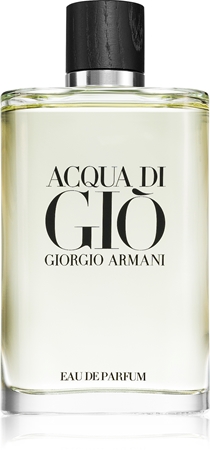
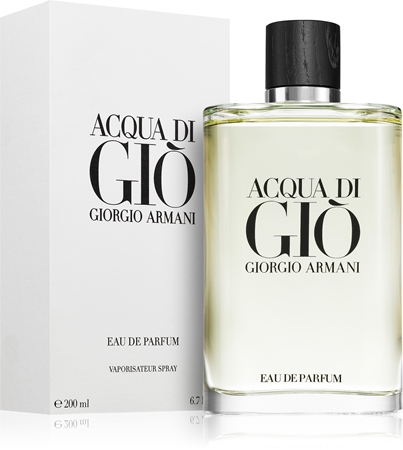
As if it had been born under the surface of the sea – the Armani Acqua di Giò Pour Homme Eau de Parfum for men is full of aquatic freshness and reflects the endless depths of water. This timeless fragrance will always be the centre of attention.
- a citrus fragrance with oceanic notes
- will delight any modern gentleman
- a fragrance suitable for everyday wear
Composition of the fragrance
It first opens with top notes of citrus and the freshness of the sea, and you smell the tangy green mandarin orange, which is a symbol of Giorgio Armani’s Mediterranean roots. Then you are pleasantly surprised by the composition of the fragrance with clary sage, lavender and geranium from Madagascar. In the last step, a woody patchouli unfolds.
Story of the fragrance
Giorgio Armani presents the Acqua di Giò Pour Homme Eau de Parfum as a fragrance for the future. That is because the Armani Acqua di Giò Pour Homme Eau de Parfum matches the values of the new generation by remembering the planet.
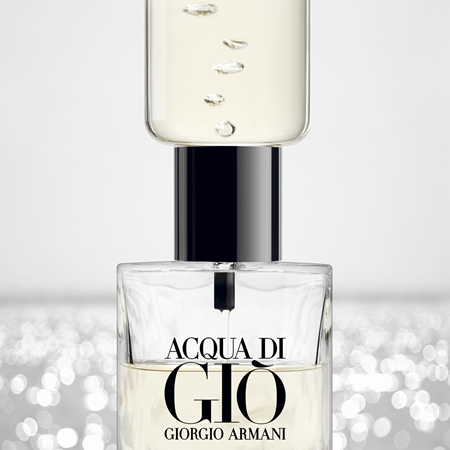
The eco-friendly flacon is refillable and reduces the use of plastic thanks to the cap made of wood sustainably sourced in Europe. The fragrance is full of natural and sustainably sourced ingredients. Giorgio Armani has made a commitment to protect the forests of Guatemala.
The clary sage from Provence was created for Giorgio Armani and is sustainably harvested in the same way as the patchouli from Guatemala, which is harvested through solidarity programmes to support local communities.