



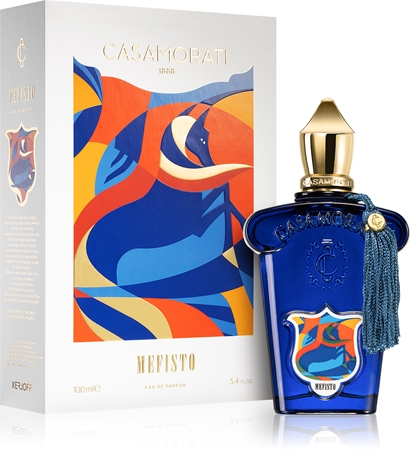
Description Xerjoff Casamorati 1888 Mefisto
Top notes Top notes - They develop straight after you put the fragrance on. They create the first impression and tend to be quite intense, but not long-lasting. | Bergamot, Lemon, Lavender |
Middle notes Middle notes - The heart of the fragrance comes out after a couple of minutes when the head of the scent fades away. These notes usually last around 2 to 3 hours. | Iris, Rose |
Base notes Base notes - The last and often longest part of the fragrance's evolution on your skin. Takes anywhere from 4 hours to over a day. | Musk, Sandalwood, Cedar, Amber |
| Fragrance category | woody, fresh |
| Concentration of the fragrance component | Eau de Parfum |
This unique vintage fragrance is inspired by the classical art of Italian perfumery. That’s also how you could describe the aromatic Eau de Parfum for men Xerjoff Casamorati 1888 Mefisto. It stands out for its rich oriental nuances, which are softened in the heart notes; their perfect harmony underscores the individuality and elegance of the wearer.
- an aromatic and citrus vintage fragrance
- for elegant and stylish men
- luxurious art nouveau packaging
Composition of the fragrance
The sensual play of this aromatic citrus composition is opened daringly by grapefruit, lemon and bergamot, gradually joined by soothing lavender blossom. Next come the notes of the classical floral heart, created by rose petals and Florentine iris, which epitomises its Italian character perfectly. This unique composition of the fragrance is completed by Mysore sandalwood, followed by amber and musk to create its woody base notes.
Story of the fragrance
The Mefisto Eau de Parfum for men belongs to the Casamorati collection, which is an ode to the antique artistic heritage of the charming art nouveau period. Its artistic expression and authenticity only live on thanks to the use of the highest-quality ingredients and materials, which were actually used in the legendary perfume house of La Fabbrica di Profumi di C.Casamorati, founded in Bologna in 1888.
During the intervening years, the Casamorati collection has received a host of prestigious awards at national and international exhibitions.